


The Walking Dead: Season One
4.264.24K Reviews
App Specs
- Version
- 1.23
- Updated On
- License
- Free
- Downloads
- 10,000,000+
- Developer
- Skybound Game Studios, Inc
- Categories
- Adventure
- Platform
- Android
Screenshots
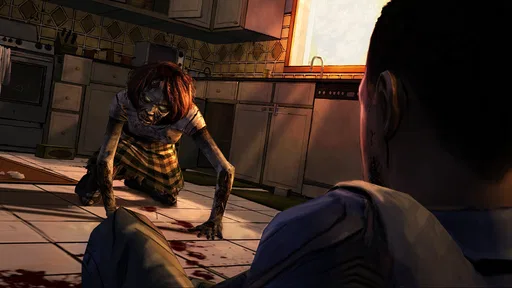
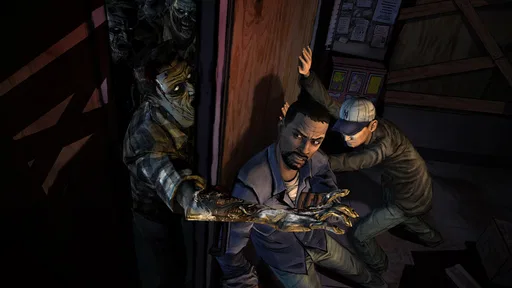
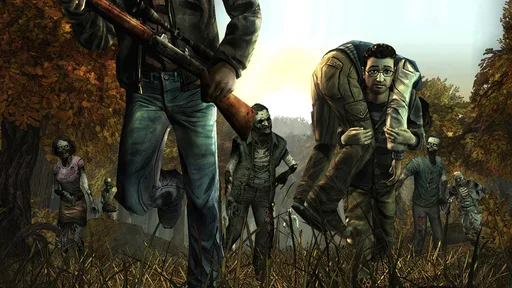
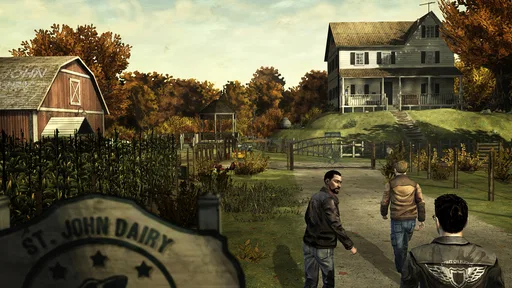
 Analysis by AppCompare
I approached The Walking Dead: Season One expecting a story-led adventure, and that is exactly where it makes its strongest impression. This is not a game built around constant combat, complicated character builds, or endless map clearing. It puts me in the middle of a tense survival story where conversations, quick decisions, and the people around me matter as much as the danger outside. The result feels closer to taking part in an interactive drama than playing a traditional action game.
The game comes from Skybound Game Studios, Inc and has become one of the better-known examples of narrative adventure on mobile. Its average rating sits at 4.2 from around 1.3 million ratings, while more than 10 million people have installed it. Those numbers make sense to me: the central appeal is easy to understand, but the emotional tone is much heavier than the simple store summary might suggest.
What to expect before you begin
The first thing I would tell a new player is to slow down. The Walking Dead: Season One rewards attention more than speed. You will spend time talking with characters, examining your surroundings, responding under pressure, and deciding what kind of person you want to be when there is no perfect answer. Some moments ask for a quick response, but the larger experience is about reading the situation and accepting that every choice can change the mood of a scene.
That makes it a good fit for someone who enjoys character-focused adventures and television-style storytelling. If you prefer games where progress comes from mastering controls or collecting stronger equipment, this may feel unusually quiet. I found that its most memorable moments often came from a conversation or a difficult judgment rather than from any conventional victory screen.
The mature 17+ rating is important to take seriously. The story deals with frightening situations, violence, grief, and emotionally difficult choices. I would not treat it as a casual game for children simply because it is available on a phone. It is better suited to an older player who is comfortable with serious themes and wants a dramatic experience rather than a light distraction.
It is free to download, with in-app purchases ranging from $4.99 to $14.99 per item. Before starting, I would check which part of the experience is immediately available on your device and which content may require a purchase. That small bit of preparation avoids an awkward interruption just as the story begins to draw you in.
The game was released on April 7, 2014, and its current version is 1.23. It supports devices running Android 4.4 or later. Those details matter mainly because older hardware can make a story game less comfortable if loading or touch response becomes distracting. I would also make sure the device has enough battery before a longer session; the best way to play is without rushing through an important scene because the phone is about to shut down.
Worth Reading Before You Choose

EA SPORTS FC Mobile 26 Is a Bigger Football Game, but It Takes Time

Flipboard Shows What News Apps Must Do Beyond the Feed

Switching to Android Auto Means Rethinking Your Driving Routine

Google Calendar Makes a Crowded Week Easier to Manage

Ludo King Makes the Most of the Minutes Between Plans

Baby Panda World Brings Quick Play to Modern Phones, but Its Game Library Feels Busy
Why the opening works for first-time players
The early sections do a useful job of teaching the rhythm without turning the experience into a tutorial full of pop-ups. I learned that I should inspect the environment carefully, listen to the wording of each conversation, and treat timed prompts as decisions rather than reflex tests. The game gives me enough context to understand what is happening, but it does not remove the uncertainty that makes the choices interesting.
One practical tip is to avoid playing while distracted. A short phone call, a noisy commute, or a conversation happening beside you can make you miss a line that changes how a scene feels. I get more from it when I use headphones or play somewhere quiet, not because the controls are demanding, but because the dialogue carries so much of the experience.
Another useful expectation is that the game is not asking me to find a universally correct route. I initially wanted to choose the response that would keep everyone happy, but that is rarely possible. A better approach is to decide what matters to my version of the protagonist and accept the consequences. That makes the story feel personal instead of turning every exchange into a puzzle with one hidden answer.
Getting through the first session
When I start a session, I try to make the first goal simple: learn the game’s rhythm, not steer every character toward an ideal outcome. I pay attention to what a scene is asking of me, then choose a response that fits how I want to handle the pressure. That makes the opening feel like a story I’m participating in rather than a test I have to pass.
Setup that prevents avoidable frustration
After installing, I would begin with a little patience. The most important setup is not a complicated account process or a long list of settings; it is creating the right conditions for a focused story session. Keep the phone charged, use a stable connection if the game requests one during installation or content access, and avoid closing the app repeatedly while it is moving between scenes.
Touch controls are generally approachable, but a smaller screen can make precise interaction less comfortable than it would be on a tablet. I found that holding the device steadily helps when the game presents several things to inspect in one area. If an object seems unimportant, I still check it when the scene allows it, because environmental details can provide context even when they do not produce an obvious reward.
Do not expect a traditional inventory routine to carry the experience. The pleasure comes from understanding a situation, speaking to people, and acting when the pressure rises. Players coming from action adventures may spend too much time searching for a combat-style upgrade path that is not the point here. I recommend treating each location as a scene to read rather than a level to clear.
Reaching the first meaningful success
For me, the first meaningful success is not defeating a large group of enemies. It is making a deliberate decision while understanding why it matters. The game gradually teaches that success can mean protecting trust, finding a way through a tense moment, or choosing to help someone even when the safer option would be to stay uninvolved.
A reliable method is to read every response before tapping. When a timed choice appears, I try to identify the immediate goal first: calm someone down, gather information, protect a person, or move the scene forward. I do not always choose perfectly, but this prevents me from selecting an option simply because it appeared first. That small habit makes the experience feel less random.
Exploration also deserves more attention than a quick playthrough might suggest. When I look around before moving on, I often understand the setting and relationships better. The game does not need to bury the player in collectibles to make observation worthwhile. A brief examination can change how I interpret a character’s next line, which is a more subtle reward than a score increase but one that suits the design.
My strongest advice is to let the first playthrough be your own. Do not immediately search for a decision guide unless you are stuck on a technical problem. Looking up every result can turn a tense moral choice into a checklist. If you later replay the story, guides become more useful because you can compare paths and see how different priorities shape the journey.
How decisions feel in everyday play
Imagine having twenty minutes before an appointment. This game can fit that kind of session, but I would not start a major conversation if I knew I had to stop in two minutes. A scene may be short in clock time while still requiring attention, and pausing in the middle of an emotional exchange can weaken its impact. For a commute or waiting room, I prefer beginning at a natural transition rather than launching it with no time available.
At home, I would set aside a longer block and play several scenes together. The relationships make more sense when I remember what was said earlier, and the emotional weight builds gradually. This is one of the uncommon trade-offs of a mobile narrative game: it is convenient to carry, but it benefits from the same concentration I would give a television episode or a novel.
The game also works well for a player who wants to discuss choices with a friend afterward. I would avoid telling someone what they should have done, because disagreement is part of the appeal. Comparing decisions can reveal how differently two people read the same character or risk. That social use is more rewarding than simply asking which route is considered best.
Common points of confusion
I find the confusing moments are usually about expectations, not complicated controls: a tense choice can feel like a puzzle, and a quiet scene can seem less important than it is. I give dialogue and small environmental details room to shape my understanding before deciding what to do next. With that in mind, it helps to know which parts of the experience suit a first playthrough and which habits can get in its way.
Is this mainly an action game?
No, and that is the first expectation I would correct. There are dangerous moments, but the game’s identity comes from narrative, dialogue, and decision-making. The pacing can be tense without giving me constant control over movement or combat. If I wanted an action-heavy zombie game with repeated battles, this would not be my first choice.
Compared with arcade-style alternatives, it offers less mechanical repetition and more consequence-driven drama. Compared with a conventional television series, it gives me a stronger feeling of responsibility because I am the one selecting responses. It sits between those formats, and that hybrid structure is both its main strength and its main limitation.
Do I need to make perfect choices?
No. In fact, chasing perfection can make the story less enjoyable. The design is more interesting when I make a choice based on the information available at that moment, then live with the result. Some outcomes may feel unfair or painful, but that discomfort is part of the intended experience rather than evidence that I failed to find a secret answer.
That said, I would save a backup of my expectations, not necessarily a duplicate file: decide whether you want a personal first run or an optimized run before you begin. A personal run is better for emotional immersion. An optimized run is better for players who enjoy testing branches and comparing consequences. Mixing the two can lead to constant reloading and make every decision feel disposable.
What if the touch controls feel awkward?
Give yourself time to learn the interaction pattern before judging the whole game. On a phone, tapping small objects or responding quickly can be less comfortable than on a larger display. I found that using both hands and keeping my thumb near the lower part of the screen helped me react without covering the scene.
The controls are not the reason to choose this game, so players with limited patience for touch input should consider that trade-off honestly. A larger screen can make inspection and timed responses easier. If your priority is flawless physical control, a platform designed around a controller may be a better fit; if your priority is carrying a serious story in your pocket, the mobile format remains appealing.
Is the free entry enough to judge it?
It is enough to understand whether the tone, pacing, and decision-based structure appeal to you. I would use the opening as a test of personal fit rather than expecting a complete sample of every dramatic idea in the game. If the early conversations already feel too slow or emotionally heavy, paying for more content is unlikely to change your opinion.
On the other hand, if you quickly become invested in the characters and find yourself thinking about your choices after closing the app, the purchase structure makes more sense. The listed in-app purchase range is something to consider before committing, especially if you prefer games with one clear upfront cost. Players who dislike optional purchases should compare that model with a premium adventure elsewhere.
What makes it stand out from similar adventures
The biggest difference is the balance between accessibility and consequence. I do not need to learn a large rule system before understanding what the game wants from me. Yet the choices are not empty decoration. Even when the wider story continues, the way a conversation unfolds can change my relationship with the people involved and alter how I remember a scene.
Many mobile adventure games lean on puzzles, collectibles, or repeated challenges to stretch playtime. Here, the tension comes from uncertainty and attachment. I am often asking myself who to trust, what information to reveal, and whether a short-term solution will create a larger problem. That is a more intimate kind of challenge than solving a locked-room puzzle.
The trade-off is replay value. A combat game can remain engaging through skill improvement, while this one depends more on curiosity about alternate choices. If I am not interested in replaying conversations or revisiting emotional scenes, the experience may feel more limited after the first run. If I enjoy comparing outcomes, the branching decisions give me a reason to return without requiring a new control system.
The game’s reputation is also substantial: its store summary notes recognition from more than 90 Game of the Year awards. I would not use awards alone as a reason to install it, but they help explain why this particular series is often discussed as a landmark for story-driven games. Its influence is easiest to understand by playing rather than by reading praise, because the important quality is how it makes ordinary dialogue feel risky.
Who should play it, and who should skip it
I recommend it to players who like character drama, difficult ethical choices, and stories that ask them to participate rather than simply watch. It is especially suitable for someone new to narrative adventures because the basic interaction is easy to grasp, while the emotional decisions provide depth without requiring genre expertise.
I would skip it if you want a cheerful, low-pressure game for short bursts, or if you dislike mature themes involving danger and loss. I would also steer competitive players toward something with clearer skill-based goals. There is no leaderboard mindset here, and the most valuable progress is often invisible: understanding a character, accepting a consequence, or reaching a moment with a different emotional history behind it.
It may not be the best choice for a young family device despite the simple touch interface. The mature rating is not just a label to ignore. The atmosphere can be intense, and the story expects the player to engage with uncomfortable situations rather than treating them as harmless fantasy.
My next-step advice after the first chapter
Once the opening has shown you the basic rhythm, I suggest choosing a consistent personal approach. You might prioritize honesty, caution, loyalty, or the protection of the most vulnerable person in the scene. The game becomes easier to follow when your decisions have a recognizable center, even if that center changes later.
Keep a short mental note of promises, disagreements, and unresolved tension. You do not need to write down every response, but remembering who trusted you and who did not makes later scenes more meaningful. This is one of the game’s quieter strengths: it encourages attention to relationships instead of reducing every interaction to a reward meter.
If you are tempted to restart after an uncomfortable result, wait until the session ends. I often find that an unexpected consequence creates a stronger story than the outcome I originally wanted. Restarting immediately can also make the game feel like a trial-and-error puzzle, when its real appeal is seeing how I respond to uncertainty.
For a second playthrough, change one major priority rather than altering every response at random. A cautious run, a compassionate run, or a more self-protective run will reveal more than tapping different options without a clear idea. This approach turns replaying into an experiment about character and consequence, not just a hunt for alternate dialogue.
After spending time with it, I see The Walking Dead: Season One as a strong recommendation for anyone who wants a serious adventure that can be played on a phone without sacrificing its focus on people. The free entry makes it easy to test the tone, and the large player response reflects how widely the format has connected with audiences. Still, the mature subject matter, touch limitations, and purchase structure mean it is not automatically right for everyone.
My honest advice is to begin when you can give the story your attention, make the first decisions without a guide, and judge the game by how much you care about the consequences rather than by how much action it provides. If you want a fast arcade experience, look elsewhere. If you want an interactive drama where a conversation can feel as important as a fight, this remains a compelling place to start.
Pros
- Strong character development and memorable emotional moments.
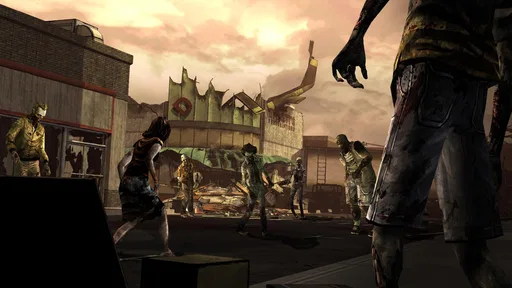
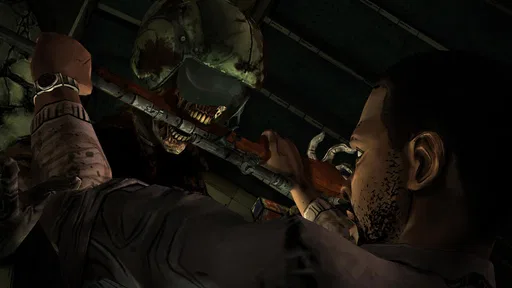
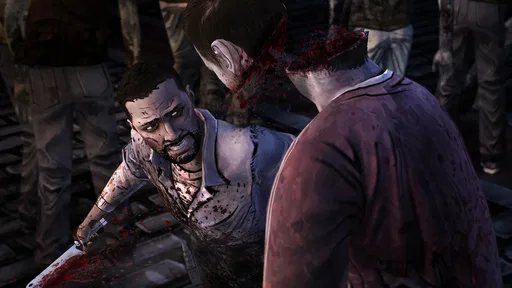
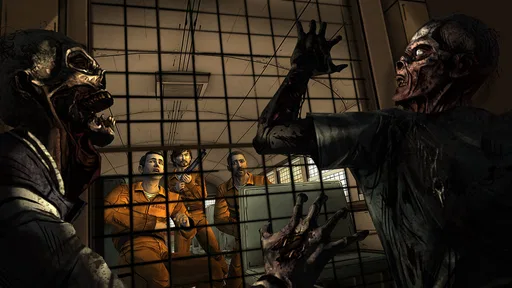
- Atmospheric visuals effectively capture the bleak post-apocalyptic setting.
- Choices create tension and encourage thoughtful decision-making.
- Well-written dialogue makes relationships feel believable and meaningful.
- Episodic format makes the story easy to follow in short sessions.
Cons
- Limited combat depth may feel repetitive for action-focused players.
- Some choices have less long-term impact than the game initially suggests.
- Occasional animation glitches can interrupt otherwise dramatic scenes.
- The complete season requires substantial storage space on mobile devices.
- Its mature themes and violence may not suit younger players.
FAQs for The Walking Dead: Season One
What is The Walking Dead: Season One about?
The Walking Dead: Season One is a story-driven adventure game based on Robert Kirkman’s comic universe. You play as Lee Everett, a convicted criminal whose life changes after the zombie outbreak begins. The game focuses on exploration, dialogue, moral decisions, and relationships rather than constant combat. Your choices can influence conversations, character reactions, and important events throughout the season.
How many episodes are included in The Walking Dead: Season One?
The season generally includes five main episodes that follow Lee and Clementine as they travel through a dangerous, zombie-filled world. Each episode continues the same storyline and builds on decisions made earlier, so playing them in order is strongly recommended. Some versions or stores may package the episodes differently, but the complete season is designed to be experienced as one connected narrative.
Does the game work offline after it has been downloaded?
In most cases, the main gameplay can be enjoyed offline once the required game files and episodes have been downloaded and installed. An internet connection may still be needed for the initial download, account verification, updates, or restoring purchases, depending on the Android or iOS version. It is best to install every available episode while connected to Wi-Fi before playing away from home.
Is The Walking Dead: Season One suitable for children?
The game is generally intended for mature players because it contains graphic zombie violence, frightening scenes, strong emotional themes, death, difficult moral situations, and occasional profanity. Although the gameplay is accessible, the story deals with loss, fear, survival, and family-like relationships in a serious way. Parents should check the age rating on their local app store before allowing younger players to download it.
Will my choices change the story in The Walking Dead: Season One?
Yes, your decisions affect dialogue, relationships, and the way certain scenes unfold. The game frequently asks you to choose whom to trust, what information to reveal, and how to respond during stressful situations. However, the overall storyline follows a planned structure, so choices do not create completely separate campaigns. Their biggest impact is on character interactions, emotional consequences, and how your version of the story feels.


